How Does Social Media Affect Mental Health? (Research-Backed Guide for 2026)
If you have ever closed Instagram feeling worse than when you opened it, you are not imagining things. How does social media affect mental health? In short: it can raise anxiety and low mood when use is passive, endless, or comparison-heavy, but it can also support connection and belonging when use is intentional and bounded. The effect depends less on “screen time” alone and more on how you use platforms, who you follow, and whether scrolling replaces sleep, movement, or real conversation.
This guide breaks down what research says about social media and mental health in 2026, who is most affected, when platforms help instead of hurt, and what you can actually do, whether you are a daily user, a parent, or someone who posts for work.
How Does Social Media Affect Mental Health? The Direct Answer
Social media affects mental health through several overlapping pathways:
- Social comparison, Curated highlight reels make ordinary life feel like falling behind.
- Variable rewards, Likes, replies, and new posts train your brain to keep checking.
- Sleep disruption, Late-night scrolling cuts rest, which worsens mood and stress tolerance.
- Information overload, News and conflict-heavy feeds increase worry and emotional exhaustion.
- Connection (positive), Support groups, friends, and niche communities can reduce loneliness when engagement is active, not passive.
Major health bodies treat this as a serious public-health topic. The U.S. Surgeon General’s advisory on social media and youth mental health notes that while benefits exist, there is growing concern about harm, especially for adolescents. A 2023 American Psychological Association health advisory similarly emphasizes that design features, content, and context matter more than total minutes logged.
Bottom line: Social media is not uniformly good or bad. It amplifies whatever patterns you bring to it, comparison, avoidance, connection, or creativity.
Social Media and Anxiety: Why Scrolling Can Feel Like a Threat
Anxiety often spikes when social media turns into uncertainty monitoring: checking whether a post performed, whether someone replied, or whether something bad happened in the news.
Common anxiety drivers include:
- Fear of missing out (FOMO), Seeing events you were not invited to or trends you are “late” on.
- Performance pressure, For creators and professionals, every post can feel like a public report card.
- Conflict exposure, Pile-ons, hot takes, and outrage cycles keep the nervous system on alert.
- Hypervigilance, Notifications train you to anticipate the next ping.
Research on adolescents and young adults frequently links passive consumption (scrolling without interacting) with higher anxiety symptoms, while active use (messaging friends, participating in supportive groups) shows weaker or mixed associations. That distinction matters if you are trying to change habits without quitting entirely.
Practical shift: Replace 10 minutes of idle feed scrolling with one intentional action, a voice note to a friend, a comment on someone’s milestone, or closing the app after posting instead of refreshing stats.
Social Media and Depression: What the Evidence Shows
“Does social media cause depression?” is a headline-friendly question. The accurate answer is messier: heavy, problematic use is associated with higher depression symptoms in many studies, but causation runs both ways. People who already feel low may scroll more to distract themselves, which can deepen the loop.
Mechanisms that show up repeatedly in literature and clinical commentary:
| Pattern | Possible mental health impact |
|---|---|
| Late-night use | Poor sleep → lower mood next day |
| Upward comparison | “Everyone else is ahead of me” thinking |
| Low reciprocity | Consuming others’ lives without meaningful exchange |
| Cyberbullying / harassment | Strong link to depression and self-harm risk in youth |
| Social isolation substitute | Online presence without offline support |
If you manage a brand or post daily for work, burnout can look like depression’s cousin: dread before opening apps, irritability after posting, and feeling “on stage” even during personal time. Our social media content pillars guide helps reduce that pressure by batching themes instead of chasing every trend.
Comparison, FOMO, and Self-Esteem
Comparison is the silent engine behind a lot of social media distress. Platforms are optimized to show the best angle, the best moment, the best metric, not the full picture.
Self-esteem tends to suffer when you:
- Follow accounts that trigger inadequacy (body, wealth, productivity, parenting).
- Measure your worth in engagement numbers.
- Consume content that feels aspirational but not attainable.
Self-esteem tends to hold steady or improve when you:
- Curate feeds toward learning, humor, art, or mutual support.
- Post for expression or community, not constant validation.
- Use tools like character counters and planners so posting feels structured, not like an endless improvisation test.
Unfollow audit: Once a month, remove any account that leaves you feeling smaller. No explanation required.
Sleep, Scrolling, and Your Brain
Sleep is one of the clearest bridges between social media and mental health. Blue light, stimulating content, and “just one more video” at midnight directly undermine the rest your mood depends on.
Poor sleep contributes to:
- Higher irritability and emotional reactivity
- Worse concentration and decision-making
- Increased anxiety and depression vulnerability
Try a digital sunset: charge the phone outside the bedroom, use platform timers (Instagram, TikTok, and YouTube all offer them in 2026), and schedule posts in advance so you are not publishing, and then obsessively checking, right before bed. If you run accounts professionally, scheduling Instagram posts or TikTok posts lets you stay present offline while content goes live on your terms. Try CuteDyno or see pricing.
Social Media and Teen Mental Health
Teens are not “weak” for struggling with social media, they are using products built for maximum engagement during a developmental stage when belonging and identity matter enormously.
Risk factors highlighted in youth-focused advisories include:
- Body-image content and appearance comparison
- Online harassment and exclusion
- Age-inappropriate material
- Sleep displacement during critical growth years
Protective factors include:
- Active parental guidance and open conversation (not shame)
- Privacy settings and restricted hours
- Offline activities, sleep routines, and trusted adults
- Platforms and households that prioritize quality of use over total bans alone
Parents and educators should focus on patterns, who teens follow, how conflicts are handled online, whether sleep is protected, rather than only counting minutes.
When Social Media Can Support Mental Health
Social media is not the villain in every story. Used deliberately, it can:
- Reduce loneliness for people in rural areas, disabled communities, or niche interests
- Connect people to care through advocacy, psychoeducation, and peer support (not a replacement for therapy)
- Normalize help-seeking when public figures and friends speak honestly about struggle
- Build creative confidence through sharing art, writing, music, or small wins
Creators who treat platforms as a community space rather than a scoreboard often report more sustainable relationships with posting. Batch planning, clear content pillars, and affordable scheduling tools reduce the “always on” feeling that erodes wellbeing.
10 Practical Ways to Protect Your Mental Health on Social Media
- Set app timers, Platform-native limits beat willpower alone.
- Remove non-essential notifications, Keep humans, mute algorithms.
- Curate aggressively, Follow accounts that educate or uplift; mute stories that drain you.
- Separate work and personal profiles when possible, Boundaries protect identity.
- Schedule posts and log off, Publish without living in the analytics screen.
- Replace passive scrolling with active connection (messages, calls, meetups).
- Protect sleep, No feed in bed; use a real alarm clock.
- Take periodic resets, 24-hour or weekend breaks to recalibrate.
- Notice body signals, Tight chest, jaw clenching, or doom-scrolling are exit cues.
- Get offline support, Therapy, friends, and movement still outperform any feed.
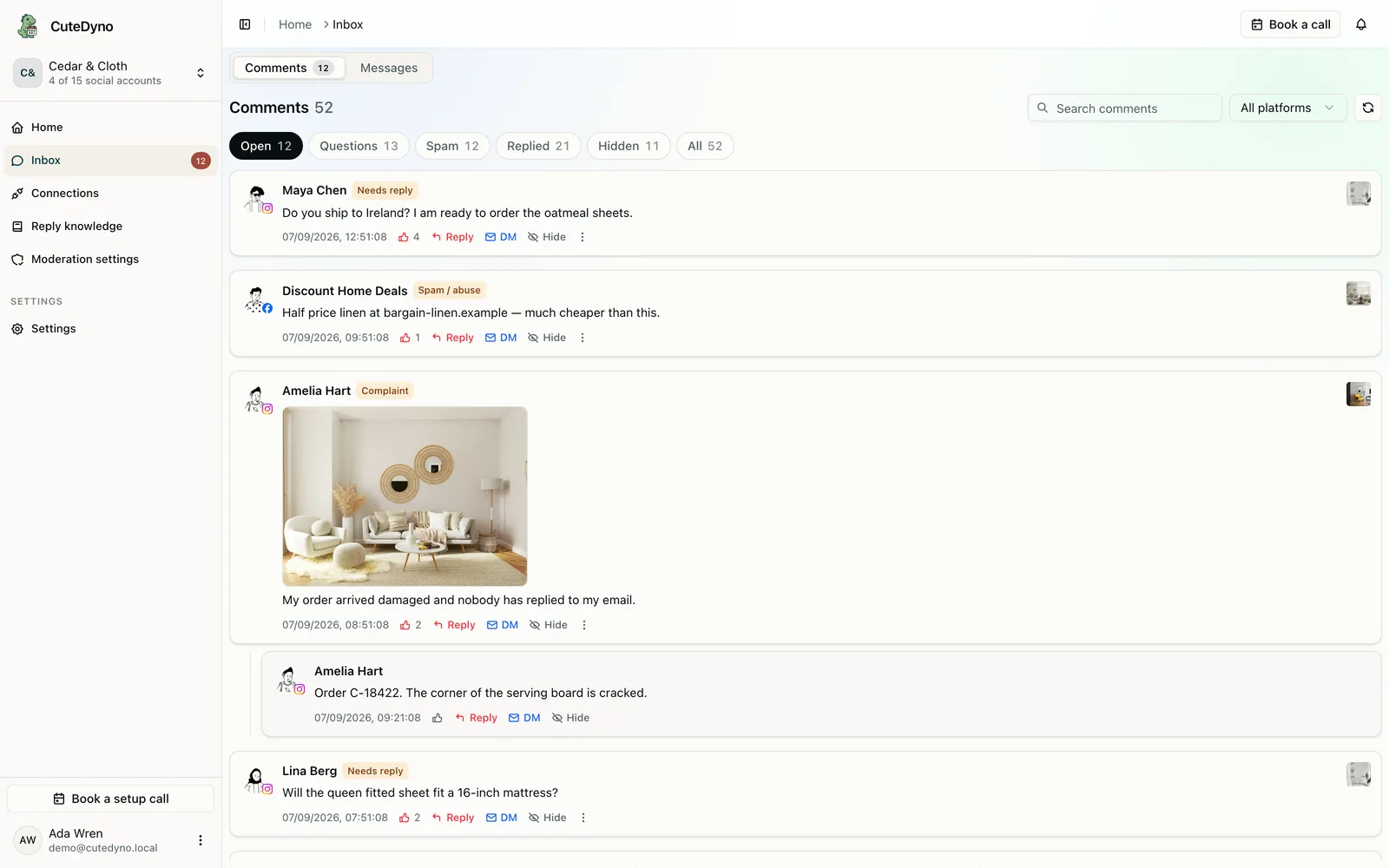
If you post for a business, pair these habits with operational boundaries: approval workflows, comment moderation, and realistic SLAs so you are not emotionally tethered to every notification. See our comment moderation guide for team-friendly systems.
How Creators and Brands Can Post More Mindfully
Professional social media use raises the stakes because metrics tie to income, reputation, and client expectations. Mindful posting does not mean posting less, it means reducing chaos:
- Plan themes ahead so you are not panic-posting into comparison spirals.
- Use AI captions as drafts, not autopilot, keep your voice human (AI caption tools work best with editing).
- Moderate comment sections so your pages stay safe for you and your audience (why dirty comments hurt).
- Cross-post efficiently instead of living in five apps at once (repurpose short-form video).
Healthier workflows protect the person behind the account, not just the brand.
Frequently Asked Questions
How does social media affect mental health?
Social media can worsen mental health when use is passive, comparison-driven, or sleep-disrupting, contributing to anxiety, low mood, and stress. It can support mental health when it fosters real connection, learning, and community. The platform matters less than your patterns: who you follow, why you open apps, and whether scrolling replaces rest or offline support.
Does social media cause depression?
Social media alone does not cause depression in every user. Research links heavy, problematic use and negative online experiences (harassment, constant comparison, sleep loss) with higher depression symptoms, especially in adolescents. Depression can also increase scrolling as a coping behavior, creating a cycle. If symptoms persist, professional help is important.
Why does social media give me anxiety even when nothing bad happened?
Feeds are designed for unpredictability, new posts, likes, news, and conflicts. Your brain treats that uncertainty like a threat to monitor. Anxiety often rises with passive scrolling, performance tracking, and FOMO, even without a specific “bad” event.
How much social media is too much for mental health?
There is no universal minute threshold. Warning signs include sleep loss, neglected relationships, mood drops after use, inability to stop scrolling, and avoiding offline life. If apps consistently leave you drained, anxious, or ashamed, reduce use or change how you use them before chasing a numeric limit.
Is deleting social media good for mental health?
For some people, yes, especially after repeated failed attempts to set boundaries. For others, full deletion cuts supportive connections or business income. A middle path, fewer apps, stricter curation, scheduled posting, no phone in bed, works well for many adults and creators.
Can teens use social media safely?
Many can, with guardrails: age-appropriate content settings, limited notifications, no phones overnight, adult conversations about comparison and bullying, and household rules that prioritize sleep and offline activities. Youth advisories emphasize design and supervision, not only total screen time.
What is the healthiest way to use social media?
Prefer active over passive use: message friends, join constructive communities, learn skills. Curate feeds, turn off excessive notifications, schedule work posts, and protect sleep. Treat social media as a tool you control, not a mood thermostat you check every few minutes.
Key Takeaways
- How does social media affect mental health? It amplifies comparison, FOMO, and sleep loss, but can also foster connection when use is intentional.
- Passive scrolling is more consistently linked to distress than active, supportive engagement.
- Teens, sleep, and harassment exposure are high-priority risk areas.
- Boundaries and workflow (scheduling, moderation, content pillars) help creators stay online without burning out.
If social media is part of your work, build systems that respect your attention, batch content, schedule posts, and step away after publishing. Your metrics can wait; your nervous system cannot.
More to read: Social Media Content Pillars · Comment Moderation Guide · Best Time to Post · Affordable Scheduler Guide · Hidden Cost of Spam Comments
Post for work without living in the app: Try CuteDyno free · View pricing